
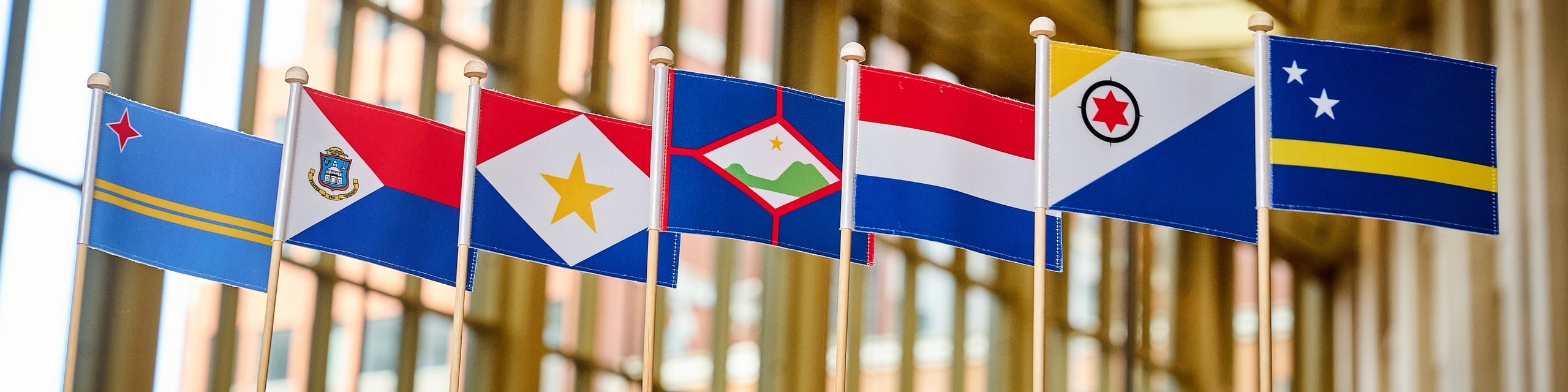
The Kingdom of the Netherlands comprises four countries: the Netherlands, Aruba, Curaçao and St Maarten. It is a constitutional monarchy, meaning that the position of the monarch is laid down in the Constitution of each of the four countries.
The Constitution lays down that the monarch and the ministers together constitute the government. The King is the head of state. The Charter for the Kingdom of the Netherlands sets out the constitutional relationship between the countries within the Kingdom.
Each country must ensure that human rights are protected and the principles of legal certainty and good government are upheld within its borders. It is the Kingdom’s responsibility to safeguard these values.
Charter of the Kingdom of the Netherlands
The Charter provides that the four countries manage their own affairs autonomously. It also lays down rules governing mutual assistance, consultation and cooperation and the constitutional organisation of the countries.
The four countries are jointly responsible for Kingdom affairs. These include foreign relations and the maintenance of the independence and the defence of the Kingdom. All matters that the Charter does not define as Kingdom affairs are country affairs.
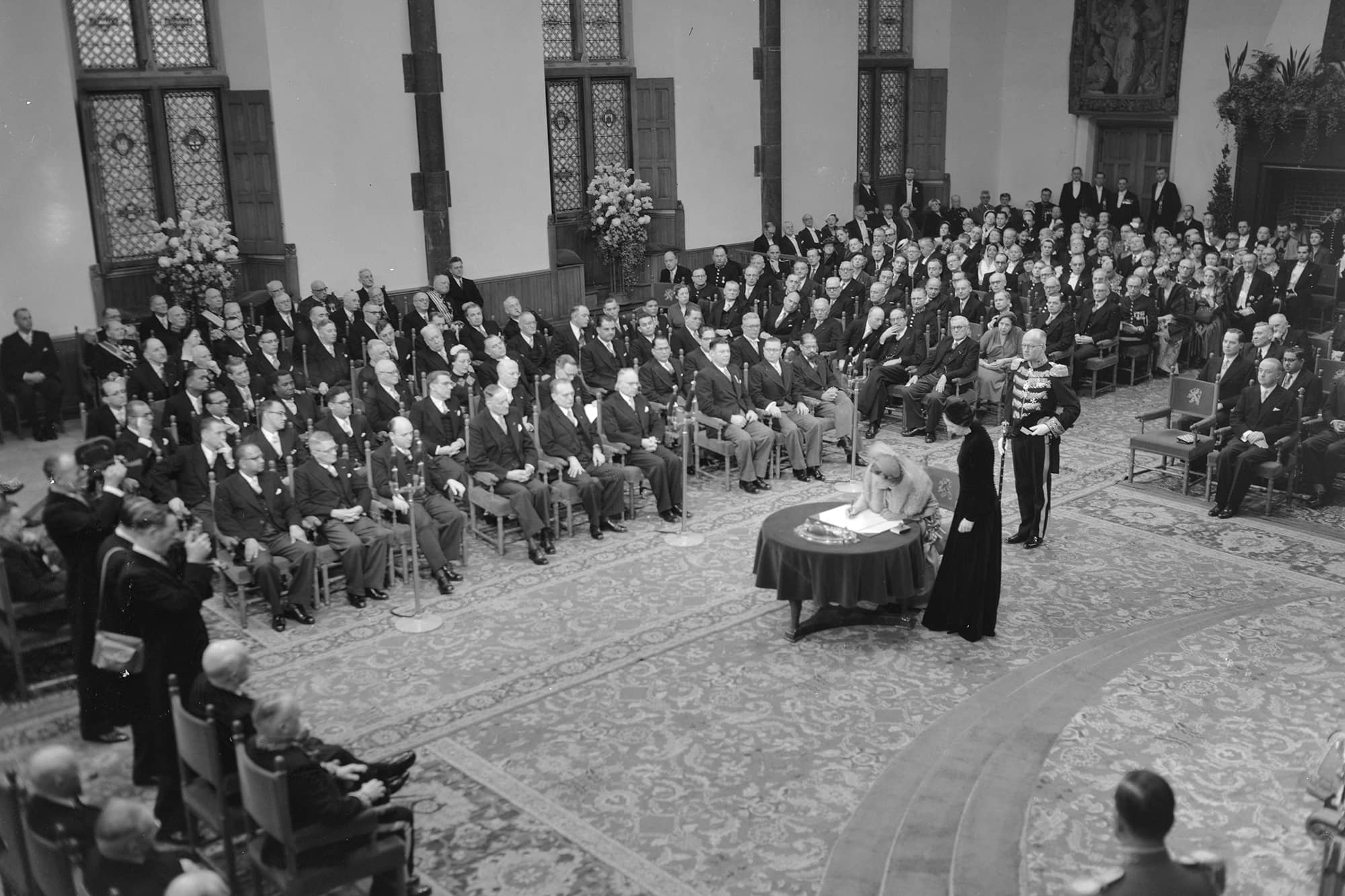
Image: © Nationaal Archief / Anefo/J.D. Noske
The countries of the Kingdom of the Netherlands
Background
Until 1795 the Netherlands was a republic: the Republic of the United Provinces. This was a federation of independent provinces which formed a state on the basis of a treaty. Although these seven provinces were autonomous in respect of their internal affairs, they were jointly responsible for the Republic’s foreign policy and defence.
As a French protectorate, the Dutch Republic was transformed into a modern unitary state, the Batavian Republic (1795-1806). Under Louis Napoleon the Netherlands first became a Kingdom. The Kingdom of Holland lasted four years (1806-1810).
The Netherlands regained its independence in 1813, when Prince Willem Frederik, son of the last stadholder, returned from exile and was proclaimed sovereign prince. The first Constitution of the Netherlands dates from 1814.
United Kingdom of the Netherlands
In 1815 the Congress of Vienna decided that the northern and southern provinces should be united. Willem Frederik proclaimed himself King of the new Kingdom of the Netherlands, and in 1815 he was invested as King Willem I .
In 1830 the southern provinces seceded, and with the signing of the Treaty of London in 1839 the Netherlands recognised the new, independent, Kingdom of Belgium. Until 1839 Luxembourg was also part of the Kingdom of the Netherlands. In that year it became a Grand Duchy, with the King of the Netherlands as its Grand Duke.
This personal union came to an end in 1890 when King Willem III died, since his daughter Wilhelmina, as a woman, had no right of succession in Luxembourg. The head of the other branch of the House of Nassau succeeded King Willem III as Grand Duke of Luxembourg.
Overseas territories
Until after the Second World War, the Kingdom of the Netherlands also comprised a significant number of overseas territories: the Dutch East Indies in Asia, Suriname in South America and the Netherlands Antilles in the Caribbean. A process of decolonisation followed in the post-war period.
In 1949 Queen Juliana signed a treaty transferring sovereignty over the former Dutch East Indies to the Republic of Indonesia, thus recognising Indonesia as an independent state. New Guinea remained part of the Kingdom of the Netherlands until 1962; in 1963 it was transferred to Indonesia by the United Nations.
On 15 December 1954, Queen Juliana signed the Charter for the Kingdom of the Netherlands, whereby Suriname and the Netherlands Antilles acquired the status of countries within the Kingdom. In 1975 Suriname left the Kingdom, becoming an independent republic.
In 1986 Aruba, one of the six islands then known collectively as the Netherlands Antilles, acquired separate status as a country within the Kingdom. In 2010 the Netherlands Antilles ceased to exist as a country. Like Aruba before them, Curaçao and St Maarten became separate countries, while the remaining three islands – Bonaire, St Eustatius and Saba – acquired the status of public bodies and now form part of the Netherlands.