
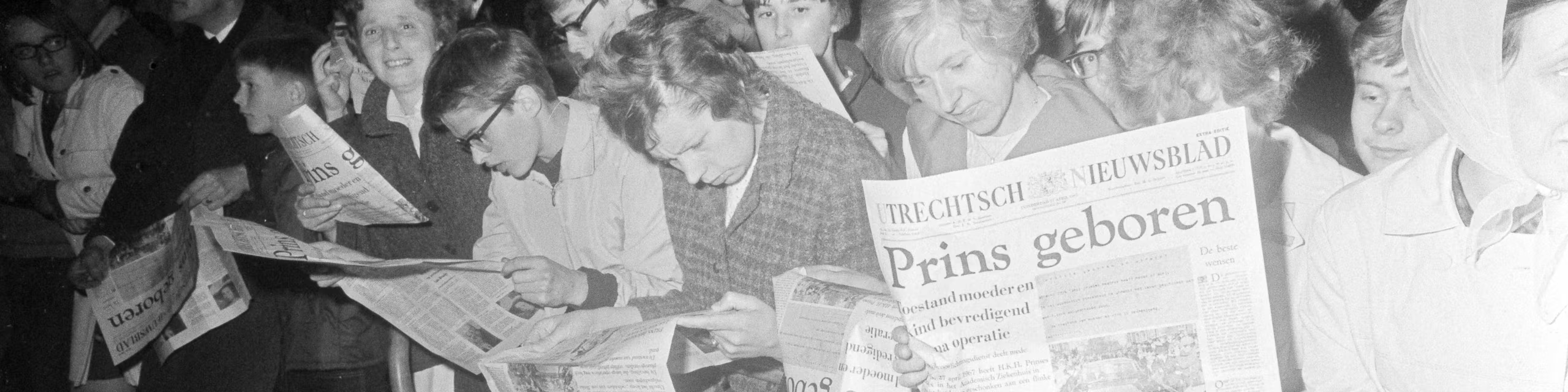
Every child born into the Royal House is in the line of succession to the throne. A number of traditions surround the birth of a son or daughter to the reigning monarch or the heir apparent.
Royal pregnancies and births are announced by the Government Information Service (RVD). The birth of an heir apparent is also announced in a special edition of the Government Gazette.
The government informs Parliament of the birth and the prime minister makes a speech of congratulation as soon as possible in both the Senate and the House of Representatives. Since 1938 the prime minister has also made a speech offering the head of state and the baby’s parents congratulations and good wishes on behalf of the Dutch people.
The cabinet usually issues flag instructions and all central government buildings fly the Dutch flag with an orange pennon for the day. This was the case following the birth of the three daughters of King Willem-Alexander and Queen Máxima.
Image: © RVD / Eric Maas
King Willem-Alexander with his daughter Princess Catharina-Amalia.
Registration
In the past the registrar of births, deaths and marriages went to the palace to register the birth of a member of the Royal House. Since 1967, when Prince Willem-Alexander was born, the father has registered the birth with the municipality where the royal baby was born. The municipality is represented by the mayor and a registrar of births, deaths and marriages.
The prime minister and the Vice-President of the Council of State are present as witnesses when the birth of an heir apparent to the throne is registered.
Christening service
The christening service was traditionally the first time a royal child was shown to the public. Nowadays, a parent presents the new member of the Royal House to the media in the hospital as soon as possible after their birth.
The christening of an heir apparent usually takes place during a church service. A special christening robe was designed for Princess Wilhelmina, which was later also worn by Princess Juliana, Princess Beatrix, Princess Christina, Prince Willem-Alexander and Princess Catharina-Amalia.
For other members of the Royal House, christenings have become more of a private occasion in the present century. They are often conducted in private and on a moderate scale. Many services of this kind have taken place in the chapel at Het Loo Palace. The sacrament of baptism is often administered by the same minister who officiated at the parents’ wedding.